Your wedding day moves fast. Without a solid timeline, even the most beautifully planned celebration can feel like a blur of rushing, waiting, and stress. A well-designed wedding day schedule does more than keep vendors on track. It protects your time, preserves your energy, and gives you actual space to be present for the moments that matter most. Whether you are planning a grand estate wedding or a more intimate gathering, this guide walks you through exactly how to build a timeline that works for you. For a broader look at how your full wedding weekend can flow together, the sample wedding weekend itinerary with onsite lodging from Castleton Farms is a great companion resource.
A wedding day timeline is a detailed, hour-by-hour schedule that maps out every event, transition, and vendor activity from the moment you wake up to the last dance of the night. It is not just a to-do list. It is the operational backbone of your entire day.
Without one, vendors make assumptions. Photographers guess when to arrive. Hair and makeup artists show up without knowing how many people they are styling. Family members wander without knowing where to be. The day fragments into a series of small emergencies.
With a solid timeline in place, everyone knows their role, every moment has breathing room built in, and you can move through your day with confidence instead of anxiety.
A good wedding timeline:
Start your timeline framework at least four to six months before the wedding. The final, detailed version should be locked in two to four weeks before the date.
Here is why the early start matters. Most timeline decisions are driven by other decisions you have already made. Your ceremony time determines your golden hour window for photos. Your venue's end time determines your reception length. Your catering package determines how long dinner service takes. Until those pieces are confirmed, you cannot build an accurate schedule.
A practical approach to timeline development by phase:
Six months out: Confirm ceremony start time, venue access window, and approximate guest count. Note any venue-specific rules such as noise curfews or vendor load-in restrictions.
Three to four months out: Collect estimated service times from every vendor. Ask your photographer how many hours they need for family formals, couple portraits, and getting-ready coverage. Ask your hair and makeup team how long they need per person.
Six to eight weeks out: Draft the full minute-by-minute schedule. Share it with your venue coordinator for feedback.
Two weeks out: Distribute the final timeline to every vendor, your wedding party, and immediate family. Make sure every person who has a role on the day has a printed or digital copy.
Building your timeline is easier when you work backwards from your ceremony start time and then fill in both directions.
Your ceremony start time is the fixed center of your entire day. Everything else builds outward from it. Most couples choose late afternoon ceremonies (4:00 to 5:30 PM) to take advantage of golden hour light for portraits. If you are set on a morning ceremony, your getting-ready timeline and reception length will shift accordingly.
Hair and makeup is almost always the longest block of the morning. A realistic formula:
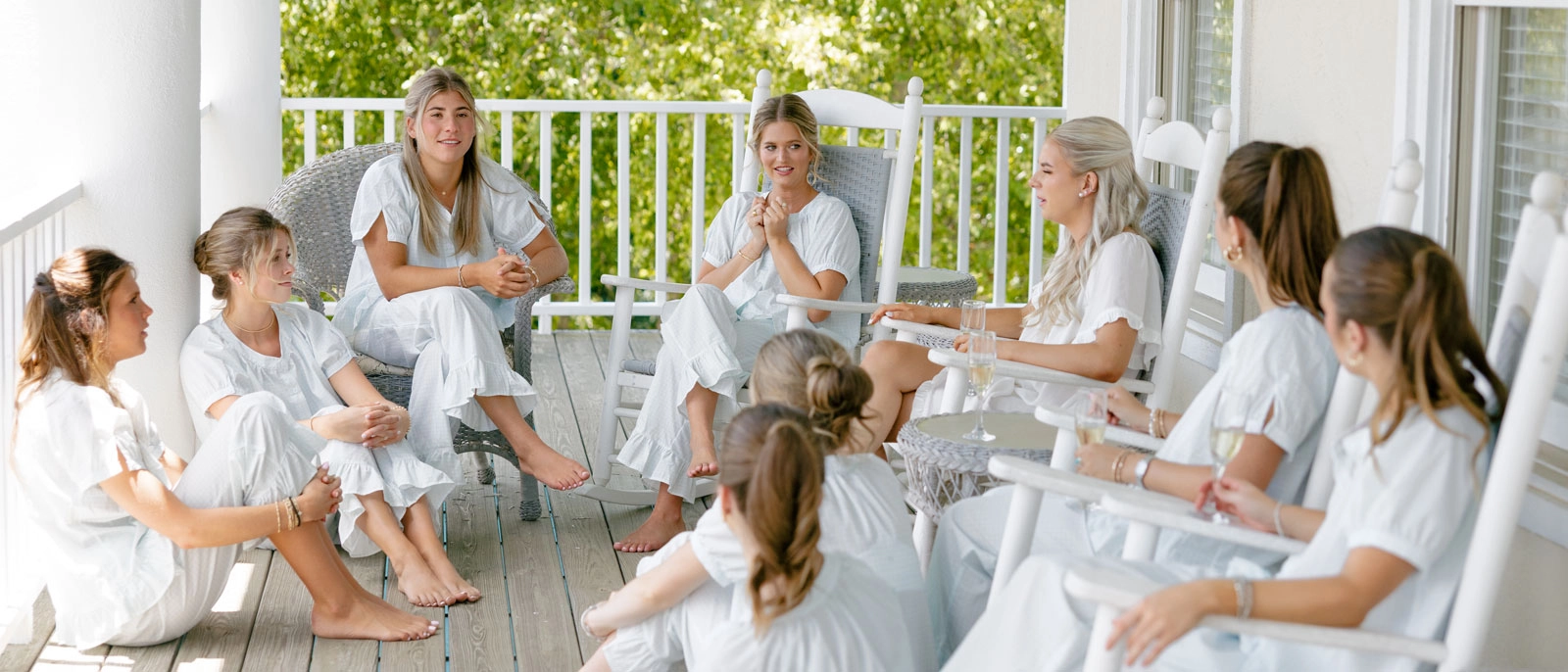
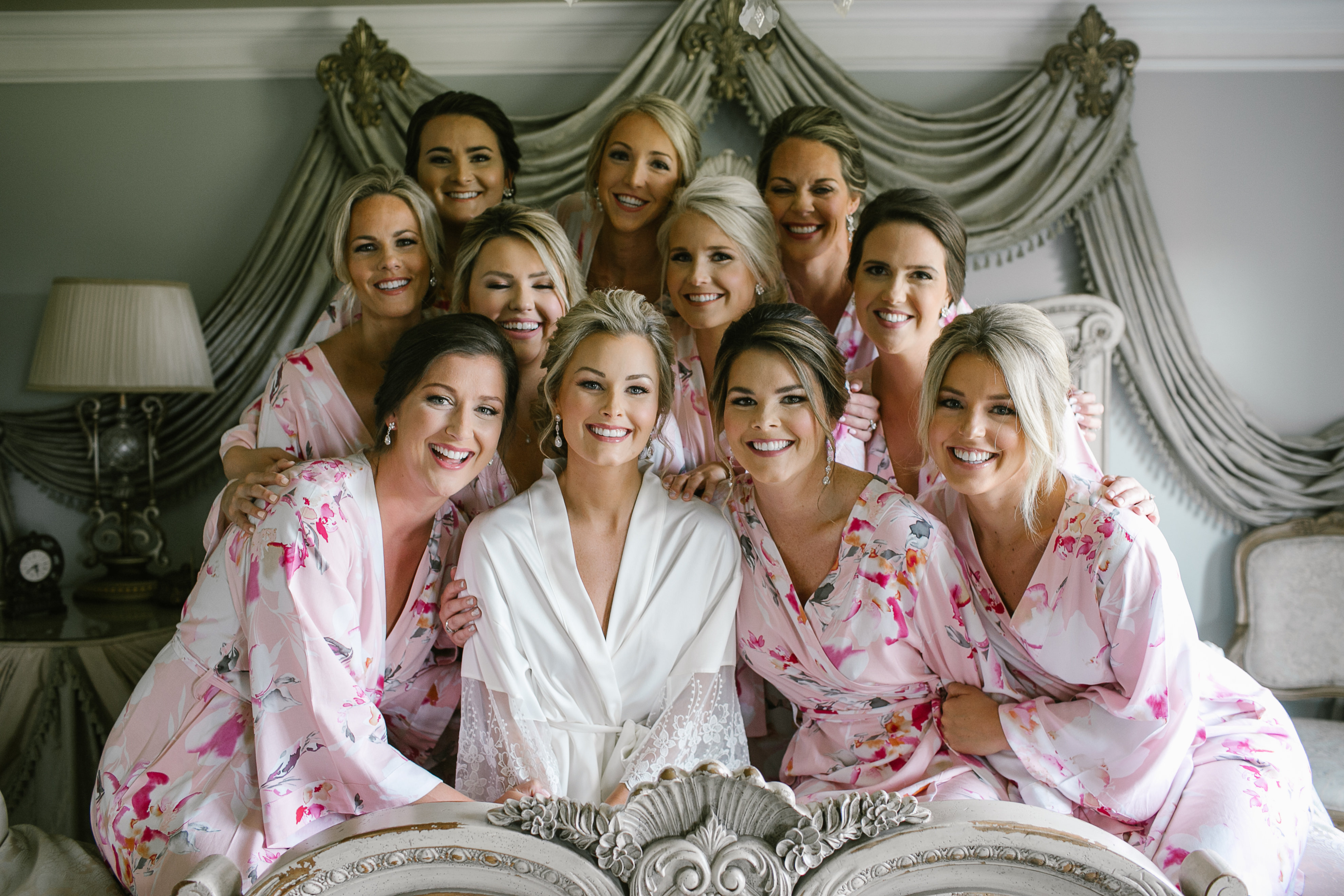
If your bridal party has six people including you, plan for at least five to six hours of getting-ready time. Your hair and makeup team should confirm their exact timing estimate. To turn getting ready into a relaxing experience rather than a stressful rush, build in more time than you think you need and treat the morning as part of the celebration, not just prep.
Work with your photographer to identify exactly what shots they need and how long each will take. Common blocks to plan for:
Write out every element of the ceremony in order and assign a realistic time to each. A typical ceremony breakdown:
Most receptions follow a natural sequence. Build time blocks for each:
This is the single most important thing most couples skip. Add 10 to 15 minutes of buffer time between every major transition. Guests do not move quickly. Family photos run long. Traffic happens. Your timeline needs room to breathe.
If photography matters to you, ceremony start time is one of the most important decisions you will make. Here is how to think about it by season and lighting.
Spring and fall: A 4:30 to 5:00 PM ceremony start gives you golden hour light approximately 60 to 90 minutes after the ceremony ends, which is ideal for couple portraits during cocktail hour.
Summer: Summer sun sets later and sits high in the sky most of the afternoon, creating harsh midday shadows. Aim for a 5:00 to 6:00 PM ceremony start if portraits matter.
Winter: Golden hour arrives much earlier, sometimes by 4:30 PM. A 2:00 to 3:00 PM ceremony allows you to finish formals before light fades. Evening winter receptions with candle and string light settings can be stunning.
If you cannot adjust your ceremony time, there are workarounds. Covered outdoor spaces and shade-rich settings diffuse harsh light effectively. A quick couple session 20 minutes before sunset, even mid-reception, can yield beautiful results.
Here is a sample framework for a 5:00 PM ceremony with a 10:00 PM end time. Adjust based on your specific vendor needs.
8:00 AM Hair and makeup begins for bridal party (6 people)
12:00 PM Photographer and videographer arrive for detail shots
12:30 PM Bride's hair and makeup begins
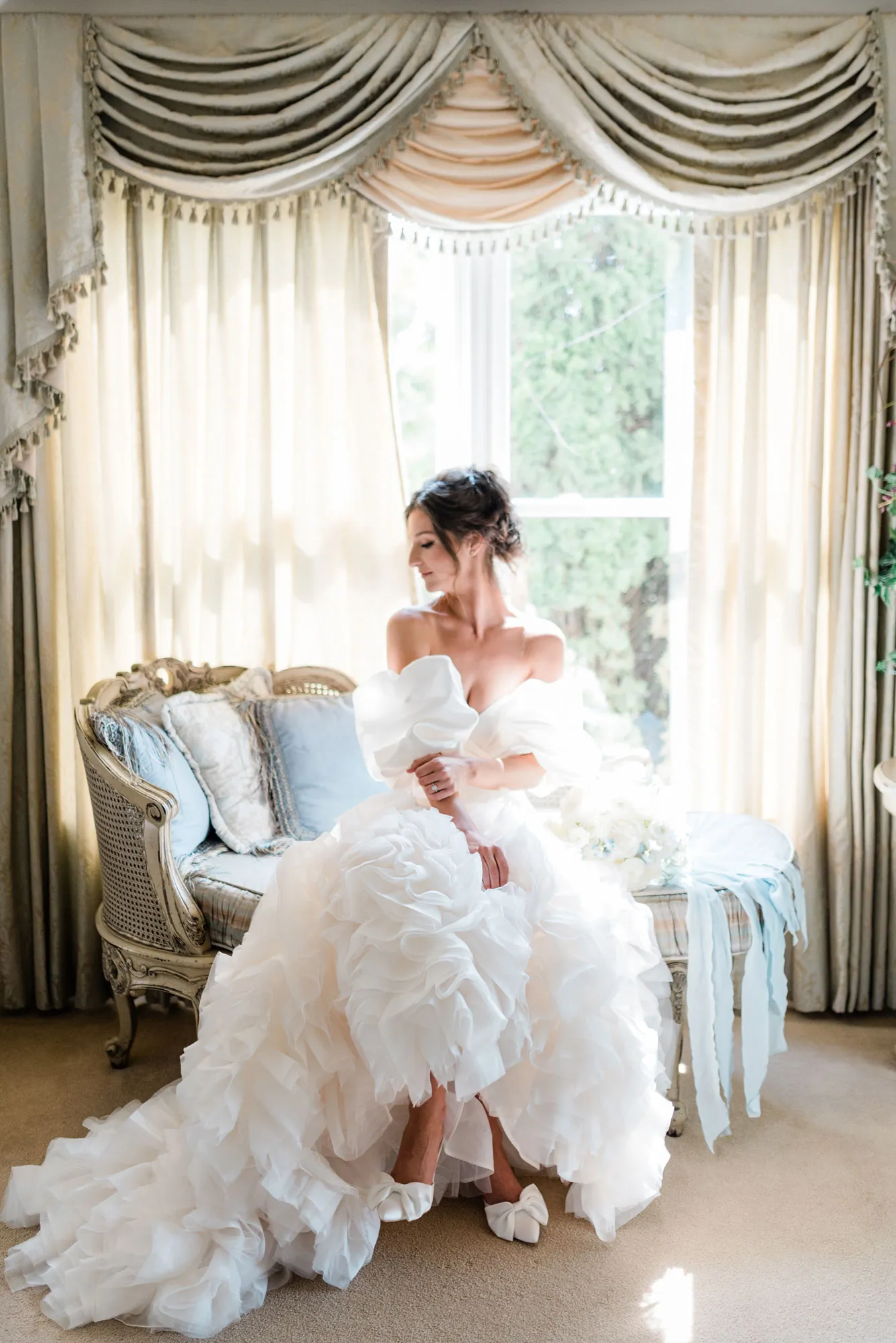
1:30 PM Getting dressed, first look with bridal party
2:00 PM First look with partner (if applicable)
2:30 PM Couple portraits and bridal party portraits
3:30 PM Family formals
4:15 PM Couple gets a break, guests begin arriving
4:30 PM Guest seating begins
4:50 PM Wedding party lines up for processional
5:00 PM Ceremony begins
5:45 PM Ceremony ends, cocktail hour begins
6:00 PM Golden hour couple portraits (20 minutes during cocktail hour)
6:45 PM Grand entrance to reception
7:00 PM First dance, welcome toasts
7:20 PM Dinner service begins
8:15 PM Parent dances
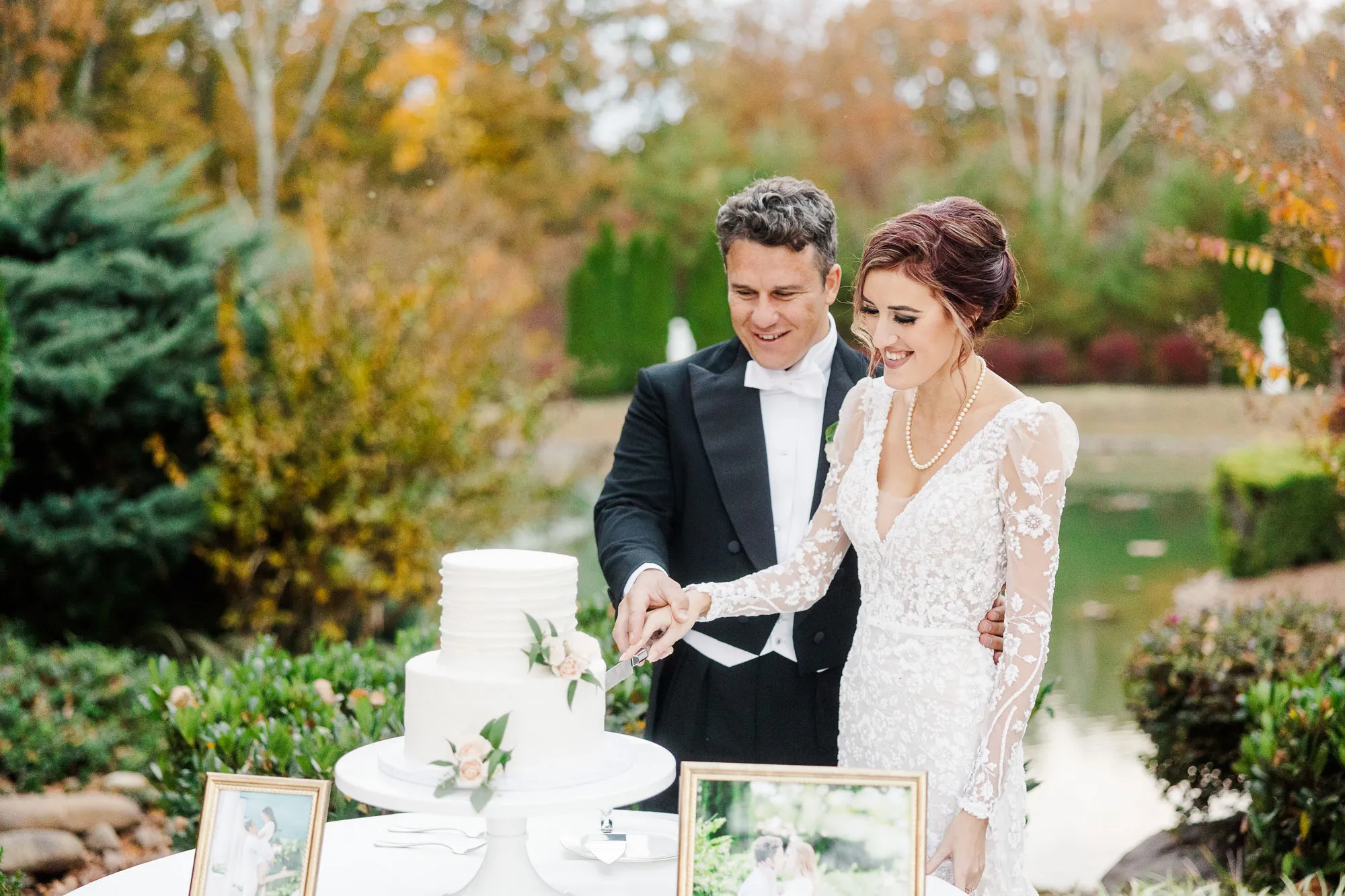
8:30 PM Cake cutting
8:45 PM Open dancing begins
9:45 PM Last dance
10:00 PM Send-off
Understanding this distinction can reduce stress for both you and your vendors.
A hard timeline runs on fixed clock times. Every event has a specific start time that vendors and family must hit. Hard timelines work well for larger weddings with many moving parts, venues with strict curfews, and events that include live performances or catered plated dinners with a kitchen team waiting on cues.
A soft timeline uses suggested time windows rather than exact times. It gives more flexibility and is often preferred for intimate weddings, backyard celebrations, or couples who want a relaxed, flowing day rather than a structured event.
Most weddings benefit from a hybrid approach. Keep hard times for ceremony start, catering service windows, and venue end time. Allow soft windows for transitions, the cocktail hour flow, and open dancing. This gives your vendors the structure they need while giving you the freedom to linger in a moment without feeling like you are running behind.
Smaller guest lists require less ceremony time and fewer logistics, but they do not require less planning. In fact, micro wedding timelines benefit from more intentional design because every moment is more visible.
For a micro wedding with 20 to 40 guests, consider the following adjustments:
For couples weighing the differences between scale and structure, reading more about the micro wedding vs. traditional wedding decision can help clarify which format actually fits your vision before you start building a timeline around the wrong event type.
Your venue is not just a backdrop. It is an active variable in your timeline. The wrong venue choice creates timeline problems you cannot solve no matter how well you plan.
Here is what to evaluate when you consider venue and timeline together:
Access windows: Does the venue offer early access for setup and getting ready, or do vendors have a tight load-in window? A venue that lets your team arrive at 8:00 AM gives you far more morning flexibility than one that opens at noon.
Distance between spaces: If your ceremony and reception are in different locations on the property, account for guest transition time. A five-minute walk for guests who are dressed up and navigating outdoor terrain takes closer to 15 minutes in practice.
On-site getting-ready suites: Having a dedicated bridal suite on the property eliminates travel time and gives your photographer consistent access all morning.
Weather contingency spaces: A venue that offers both indoor and outdoor ceremony options lets you finalize your setup the morning of without scrambling. Build your timeline around the outdoor option but make sure your team knows the indoor pivot plan.
Vendor coordination: Some venues provide a dedicated day-of coordinator who manages vendor arrival and cuing. Others leave that responsibility to you or a hired planner. That difference can add or remove an hour of stress from your morning. A dedicated wedding planning team embedded in your venue is one of the clearest ways to protect your timeline from the unexpected.
When comparing venues, it is also worth thinking about the broader financial picture. The all-inclusive vs. DIY wedding venues breakdown is useful for understanding how venue structure affects not just your budget but the number of moving parts you are personally responsible for coordinating on the day.
Even the most organized couples make these errors. Knowing them in advance means you can plan around them.
Not accounting for real travel times. Google Maps estimates assume normal traffic and ideal conditions. On your wedding day, you will have a larger group, formal attire, and emotional moments slowing every transition. Double every travel time estimate.
Underestimating family formal photos. This is the single biggest source of timeline delays. Every additional grouping adds time. Keep your list tight. A good rule is to limit family formals to immediate family only unless specific extended family shots are essential.
Skipping a first look to stay traditional. Seeing each other before the ceremony is a personal choice, but skipping it means pushing all couple portraits to after the ceremony. That compresses your cocktail hour and often means you spend less time celebrating with guests.
Not eating. Block a specific 10 to 15-minute window in your timeline for both of you to sit, eat something, and breathe. Couples who skip this regret it.
Building a timeline without your vendor input. Your photographer knows how long family formals actually take. Your caterer knows how long plated dinner service runs. Build the timeline with them, not around them.
Forgetting to share the timeline broadly enough. Your photographer, videographer, caterer, florist, DJ or band, officiant, hair and makeup team, venue coordinator, and your entire wedding party all need a copy. So do your parents and any family members with a role in the ceremony.
If stress management is something you are already thinking about, pairing your timeline work with a plan to create a stress-free wedding day with spa packages before the wedding is one of the most underused strategies couples have available to them.
If you love spreadsheets, color-coded documents, and 15-minute increments, your instinct will be to over-schedule every moment. That attention to detail is genuinely useful, but it can work against you if the timeline becomes too rigid.
The goal of a timeline is to create space, not fill it completely. Build in white space. Give yourself moments with no vendor task, no cue, and no next item on the list.
Practical tips for detail-oriented planners:
The morning sets the emotional tone for everything that follows. A chaotic getting-ready experience tends to produce a rushed, anxious ceremony. A calm, well-paced morning produces a grounded, present couple.
The most reliable way to protect your morning is to start earlier than you think you need to. Most couples underestimate getting-ready time by 60 to 90 minutes. The extra time does not have to be structured. It becomes the buffer you actually use, or it becomes space to have breakfast, take photos you will love, and be present with the people you chose to be in that room.
A bride's self-care timeline before the wedding that includes sleep, nutrition, and stress management in the days leading up to the wedding has a direct impact on how you feel and look on the day itself. Building those habits into the week before your wedding is as important as any hour on your timeline document.
Most ceremonies run between 20 and 45 minutes. Religious ceremonies can run 60 minutes or longer. When building your timeline, confirm the expected length with your officiant and add a 10-minute buffer for processional and recessional time.
A cocktail hour of 45 to 60 minutes is standard. It gives guests a comfortable transition, allows your catering team to reset the space, and creates a natural window for couple portraits. If your ceremony and reception are in separate locations, add travel time on top of the cocktail hour.
A first look before the ceremony allows you to complete most portraits before guests arrive. It reduces post-ceremony photography pressure and lets you fully enjoy cocktail hour. That said, it is entirely a personal preference. If seeing each other at the altar matters deeply to you, build your timeline with that in mind and plan for a longer portrait session after the ceremony.
Communicate immediately with your coordinator or venue contact. A good coordinator will triage quickly, identifying which items can be condensed or reordered without affecting the guest experience. This is exactly why buffer time exists. One 10-minute delay rarely causes lasting problems if you have built in breathing room.
List the ceremony start time on your invitations and request arrival 20 to 30 minutes before that time. A brief note on your wedding website with parking directions and timeline expectations reduces day-of confusion significantly.
Two weeks before the wedding is the standard. This gives vendors time to review, raise questions, and adjust their own preparation. Resend it again three days before with any final updates.
A venue coordinator manages the venue, not your wedding. They handle vendor access, space setup, and venue-specific logistics. A day-of coordinator manages you, your vendors, and your timeline. For complex weddings, having both is worth it. For more straightforward events at full-service venues, a strong venue team can often cover both roles.
Forty-five to sixty minutes is ideal. Shorter than 45 minutes feels rushed and guests barely settle before they are redirected. Longer than 75 minutes and energy begins to drop before the reception even starts.
Use a combination of email (for vendors) and a shared document link (for wedding party and family). Print physical copies for your vendors and a few for your wedding party leaders. Include your coordinator's phone number on every copy so anyone with a question has a direct line.
Absolutely. Many couples choose to skip the bouquet toss, garter toss, or formal cake cutting. Some skip assigned seating and do a more open, party-style reception. The key is making sure your venue and catering team understand the format in advance so they can plan service and staffing accordingly.
A well-built wedding timeline does three things that no amount of decor or flowers can replicate. It protects your time with the people you love. It removes decision fatigue from the day itself. And it gives you permission to be fully present because someone else is watching the clock.
The couples who say their wedding went perfectly are rarely the ones who had everything go exactly as planned. They are the ones who built enough margin that when something shifted, the day kept moving beautifully anyway.
Three takeaways to carry into your planning:
If you are ready to plan your day at a venue where the timeline support is built into the experience, explore the full-service wedding experience at Castleton Farms and reach out to our team to start the conversation.